

Electrical and mechanical failures rarely happen without warning. In many cases, equipment begins showing signs of stress before it breaks down. One of the clearest warning signs is abnormal heat.
Loose electrical connections, overloaded circuits, worn bearings, poor lubrication, misalignment, blocked cooling, failing motors and overloaded components can all generate heat before they fail. The problem is that these early warning signs are often invisible during a normal visual inspection.
This is where infrared thermography becomes valuable.
RMT provides thermography inspections in the UAE for electrical and mechanical assets, helping companies identify overheating components, hidden defects and developing failures before they lead to downtime, safety risks or costly repairs.
What poor thermal conditions do to electrical and mechanical assets
Excessive heat is one of the most important indicators of equipment stress. When components run hotter than expected, it usually means that energy is being wasted, resistance is increasing, friction is developing, cooling is inadequate or the equipment is operating outside ideal conditions.
In electrical systems, abnormal heat may be caused by:
- loose connections;
- overloaded circuits;
- unbalanced loads;
- corroded terminals;
- faulty breakers;
- poor contact resistance;
- damaged cables;
- failing switchgear components;
- transformer issues;
- overheating busbars or joints.
In mechanical systems, abnormal heat may be caused by:
- bearing wear;
- poor lubrication;
- misalignment;
- excessive friction;
- overloaded motors;
- blocked ventilation;
- cooling system problems;
- pump or compressor issues;
- belt or coupling problems;
- process restrictions.
If these issues are not detected early, they can lead to equipment failure, unplanned shutdowns, production delays, electrical fire risks, asset damage and higher maintenance costs.
For companies, the cost of a thermal problem is rarely limited to the faulty component itself. A single failure can stop a production line, shut down a pump, affect HVAC operation, damage connected equipment or create safety concerns for employees and contractors.
Why thermography is important
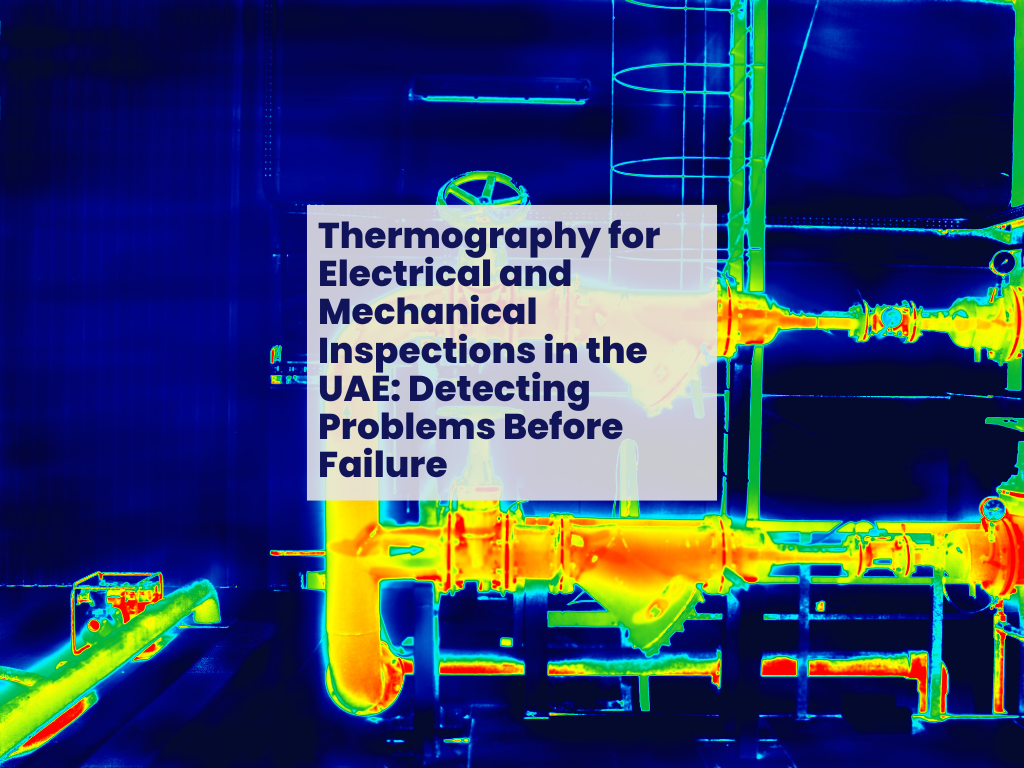
Thermography is important because it allows companies to see what cannot be seen with the naked eye. A thermal camera detects infrared radiation and converts it into a visible thermal image, showing temperature differences across equipment surfaces.
This allows maintenance teams to identify hot spots, compare similar components, detect abnormal heating patterns and prioritise corrective action before failure occurs.
Thermography is valuable because it helps companies:
- detect early signs of electrical and mechanical failure;
- reduce unplanned downtime;
- improve maintenance planning;
- identify issues without dismantling equipment;
- inspect assets while they are operating under normal load;
- reduce the risk of electrical faults and overheating;
- support predictive maintenance programmes;
- improve asset reliability;
- prioritise repairs based on severity;
- provide documented evidence for maintenance and HSE records.
Thermal imaging is widely used for electrical and mechanical inspections. FLIR, a major thermal imaging technology provider, describes thermal cameras as tools used to survey and troubleshoot mechanical equipment and electrical systems.
Thermography also supports modern electrical maintenance programmes. NFPA 70B is widely referenced for electrical preventive maintenance, and recent industry guidance highlights that infrared inspection has become an important part of maintaining electrical equipment and documenting inspection findings.
Ideal thermography inspection approach and values
Unlike lighting, noise, temperature or humidity testing, thermography does not usually rely on one universal “ideal value.” The correct interpretation depends on the equipment type, load, ambient conditions, operating history and comparison with similar components.
For example, a motor, bearing, cable termination, breaker, pump, transformer and busbar will not all have the same acceptable operating temperature. A component may be acceptable at one temperature under heavy load but abnormal at the same temperature under light load.
This is why thermography is usually assessed through:
Temperature comparison
Similar components under similar load are compared. For example, one electrical phase running significantly hotter than the others may indicate imbalance, poor contact or overload.
Thermal pattern recognition
The shape and location of the hot spot matters. A localised hot terminal may suggest a loose connection, while a broader heat pattern may suggest overload or ventilation issues.
Load condition
Electrical inspections are most useful when equipment is operating under normal or representative load. A lightly loaded circuit may not reveal a developing fault.
Severity classification
Findings are normally ranked by urgency so maintenance teams can prioritise immediate, planned or monitored action.
Trend monitoring
Repeating inspections over time helps show whether a component is stable, worsening or responding to corrective action.
As a practical guide, thermography inspections should focus on identifying abnormal temperature differences, not simply recording the hottest object in the room. The most important question is whether the heat pattern is normal for that equipment and operating condition.
Why thermal images alone are not enough
A thermal image is powerful, but it must be interpreted correctly. A hot component does not always mean a fault, and a component that looks normal may still require other forms of testing.
Thermography should consider:
- equipment load at the time of inspection;
- ambient temperature;
- reflected heat from surrounding surfaces;
- emissivity of the material being inspected;
- equipment type and design;
- whether panels, covers or enclosures affect visibility;
- whether similar components are operating under the same conditions;
- the history of previous thermal readings;
- whether the issue is electrical, mechanical or process-related.
For example, shiny metal surfaces can reflect heat and create misleading readings. Enclosed components may hide internal hot spots. Equipment running at low load may not show a developing fault. This is why thermography should be treated as a specialist inspection method, not just a simple camera image.
The best results come when thermal imaging is combined with maintenance knowledge, operating data and follow-up inspection where required.
How thermography helps in different situations
Thermography can be used across many types of electrical and mechanical assets. The value depends on the equipment, the risk of failure and the cost of downtime.
If electrical panels are overheating
Electrical panels, switchboards and distribution boards are common targets for thermography inspections. Overheating may indicate loose terminals, overloaded circuits, poor contact, phase imbalance or failing components.
Possible actions after inspection include:
- tightening or repairing connections;
- investigating load imbalance;
- replacing faulty breakers or contactors;
- cleaning or correcting corroded terminals;
- reviewing cable sizing and circuit loading;
- scheduling shutdown work based on severity;
- monitoring the component after repair.
This is especially important because many electrical issues cannot be safely detected by touch or visual inspection during operation.
If motors are running hot
Motors can overheat due to overload, poor ventilation, bearing problems, winding issues, voltage imbalance or mechanical resistance.
Thermography can help identify:
- abnormal heat at motor bearings;
- blocked cooling fins or ventilation;
- overheating electrical connections;
- uneven heating patterns;
- excessive motor casing temperature;
- heat transfer from connected mechanical components.
If a motor is running hotter than expected, maintenance teams can investigate load, alignment, lubrication, cooling and electrical supply before failure occurs.
If bearings or rotating equipment are developing faults
Bearings often generate heat when friction increases. This can happen because of poor lubrication, contamination, misalignment, excessive load or wear.
Thermography can help detect abnormal bearing temperatures on:
- pumps;
- fans;
- conveyors;
- compressors;
- motors;
- gearboxes;
- rollers;
- shafts and couplings.
Thermal findings can then be used alongside vibration analysis, ultrasound or lubrication checks to confirm the root cause.
If pumps, compressors or HVAC equipment are underperforming
Pumps, compressors and HVAC assets are critical in UAE facilities because they support production, cooling, comfort and building operation.
Thermography can help identify:
- overheating motors;
- hot bearings;
- abnormal pump casing temperatures;
- blocked filters or restricted flow;
- compressor overheating;
- poor cooling performance;
- electrical supply issues;
- heat build-up in plant rooms.
This helps facilities and maintenance teams detect issues before equipment trips, fails or affects building operation.
If production downtime needs to be reduced
For manufacturing plants, utilities, industrial facilities and process environments, unplanned downtime can be costly. Thermography supports predictive maintenance by identifying faults early enough to plan corrective action.
Instead of waiting for a breakdown, companies can use thermal inspection results to:
- plan shutdowns;
- order spare parts in advance;
- prioritise critical assets;
- repair high-risk issues first;
- monitor developing defects;
- reduce emergency maintenance.
This is one of the main reasons thermography is widely used in reliability and maintenance programmes.
If safety risks need to be reduced
Overheating electrical equipment can create serious safety risks. While thermography does not replace electrical safety procedures, it helps identify components that may require attention before they become dangerous.
Thermography can support safety by identifying:
- overheated connections;
- overloaded equipment;
- failing electrical components;
- abnormal heat in panels or switchgear;
- areas requiring controlled shutdown and repair.
This can help companies reduce the likelihood of electrical incidents, equipment damage and unsafe maintenance conditions.
Why companies in the UAE should use thermography inspections
Thermography is especially useful in the UAE because many facilities operate under high thermal demand. HVAC systems, pumps, motors, compressors, switchgear and electrical distribution assets often run continuously or under heavy load because of cooling requirements and industrial operations.
Companies should consider thermography inspections when:
- electrical panels or switchgear are critical to operations;
- motors, pumps, compressors or fans run continuously;
- equipment failure would cause downtime;
- there are signs of overheating, burning smell or repeated trips;
- preventive or predictive maintenance is being introduced;
- insurance, audit or HSE documentation is required;
- facilities teams need evidence to justify repairs;
- production lines depend on rotating equipment;
- HVAC reliability is important for building comfort or process control;
- previous failures have occurred without clear warning.
Thermography is suitable for offices, commercial buildings, manufacturing plants, hospitals, laboratories, malls, data centres, utilities, warehouses, hotels, schools, and industrial facilities.
Thermography inspections by RMT in the UAE
RMT provides thermography inspections for electrical and mechanical assets in the UAE, helping companies detect overheating components, identify developing faults and improve maintenance planning.
Our inspections support facilities managers, HSE teams, plant managers, maintenance departments and reliability teams by providing clear evidence of abnormal thermal conditions.
For UAE businesses, thermography is a practical way to reduce unplanned downtime, improve equipment reliability, support safety and make maintenance decisions based on measured data rather than assumptions.


No responses yet